University of California, Los Angeles
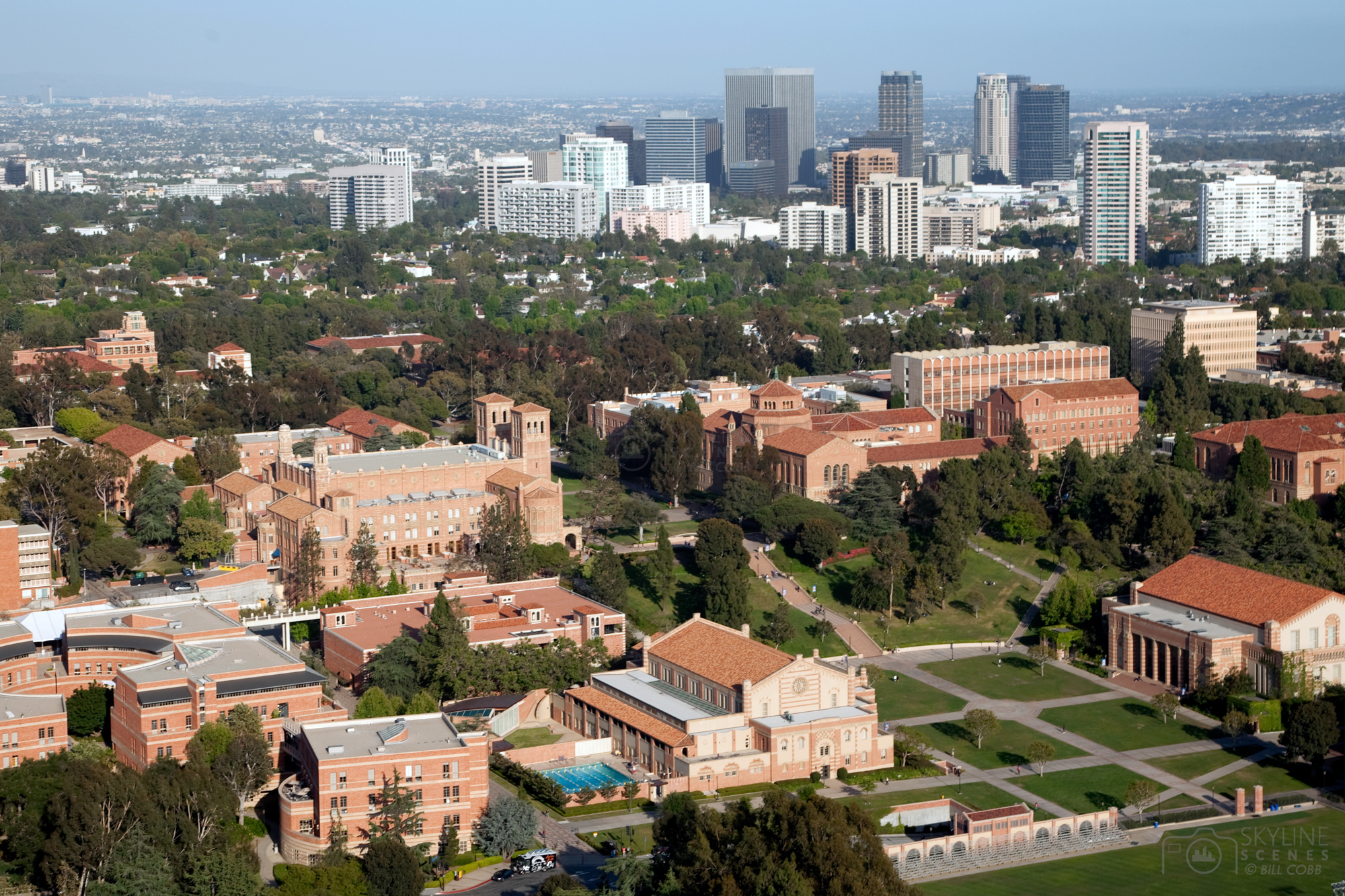
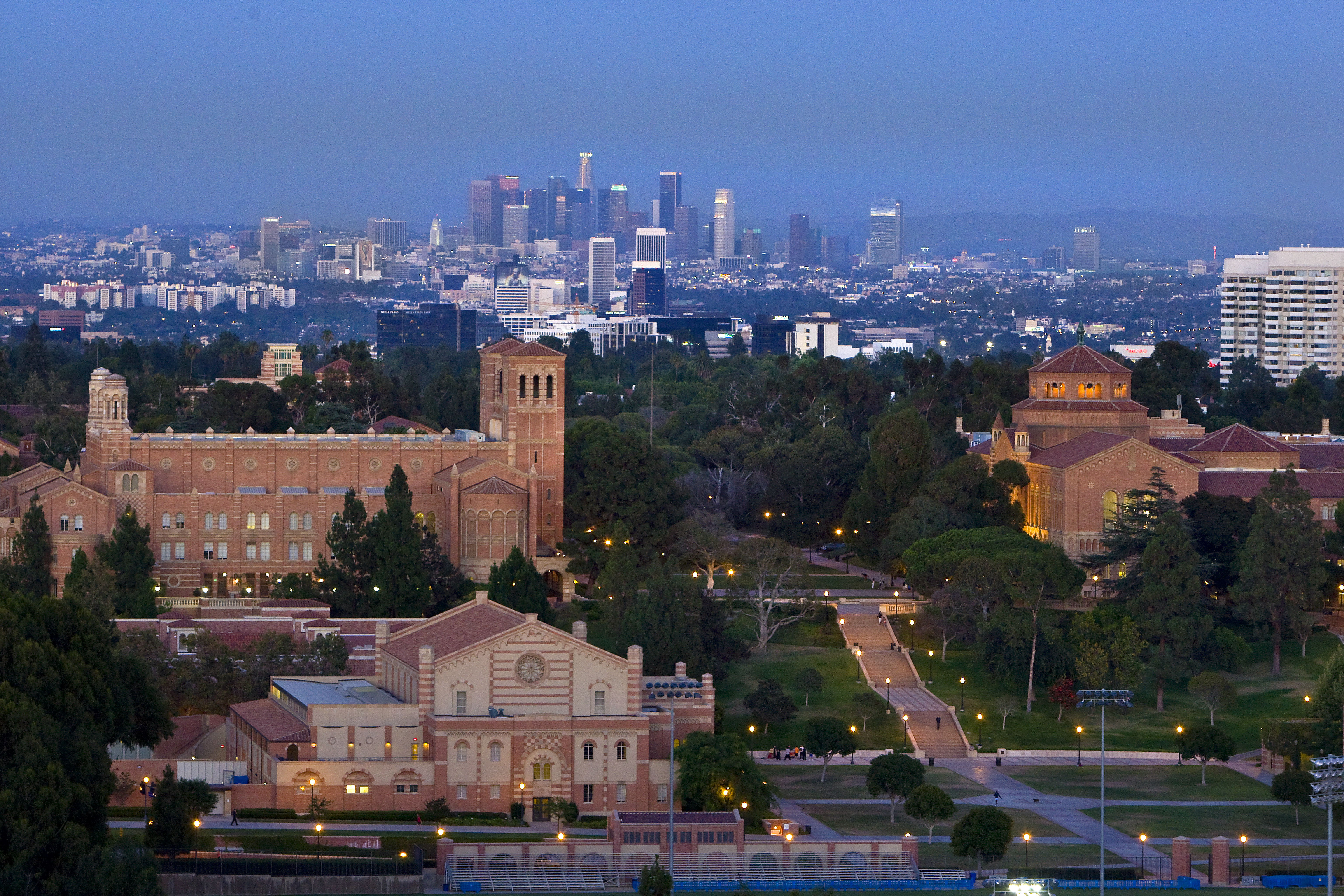
The University of California, Los Angeles (UCLA) is a public land-grant research university located in the Westwood neighborhood of Los Angeles, California. As the second-oldest campus in the University of California system and the largest university by enrollment in the state, UCLA is classified among "R1: Doctoral Universities – Very high research activity". The university is known for its breadth and quality across academic disciplines, from its distinguished programs in the social sciences, humanities, and health sciences to its renowned professional schools of engineering, law, management, and theater, film, and television. It is one of the most applied-to universities in the United States, a testament to its global reputation. Its main campus spans 419 acres in a vibrant, urban setting, just a few miles from the Pacific Ocean, offering students a rich cultural and educational environment.
University Overview
In 1917, UC Regent Edward Augustus Dickson and Ernest Carroll Moore, the Normal School's director, began advocating for the school to become the second campus of the University of California. Their efforts succeeded on May 23, 1919, when Governor William D. Stephens signed legislation that acquired the land and buildings and transformed the Los Angeles Normal School into the "Southern Branch of the University of California". The same act added a general undergraduate program, the Junior College, which later became the College of Letters and Science in 1923. The Southern Branch's first classes were held on September 15, 1919, with 1,213 women and 207 men enrolled.
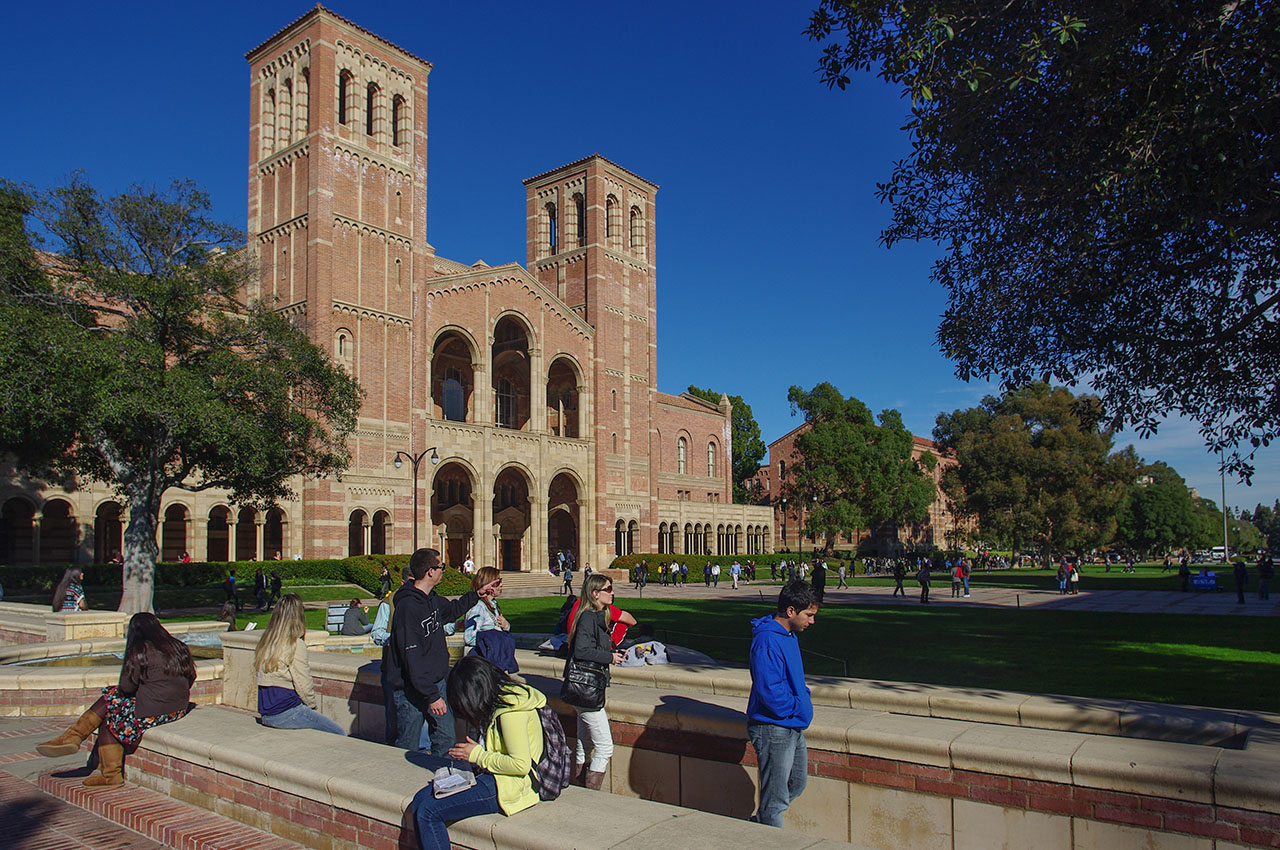
By the mid-1920s, enrollment growth necessitated a new campus. On May 21, 1925, the UC Regents selected a site in Westwood, and construction began in 1927. The new Westwood campus, featuring four original buildings in Italian Romanesque style—Royce Hall, Powell Library, the Physics-Biology Building (now Kaplan Hall), and the Chemistry Building (now Haines Hall)—opened to students in 1929 with 5,500 students. The Southern Branch was officially renamed the "University of California at Los Angeles" in 1927. UCLA was first permitted to award master's degrees in 1933 and doctorates in 1936, often against resistance from UC Berkeley. Helen Cecilia Bender received the first master's degree in 1934, and Kenneth P. Bailey was awarded the first Ph.D. in history in 1938.
In 1951, UCLA was formally elevated to coequal status with UC Berkeley, with both institutions headed by chancellors reporting directly to the UC president. Reflecting this new stature, the word "at" in its name was officially replaced with a comma in November 1958, becoming the "University of California, Los Angeles". The appointment of Franklin David Murphy as chancellor in 1960 spurred an era of tremendous growth in facilities and faculty honors, solidifying UCLA's position as a premier research university. Over its history, UCLA has been home to numerous Nobel laureates, including Ralph Bunche (Nobel Peace Prize, 1950) and professors in chemistry, physics, economics, and physiology or medicine. The university continues to evolve, having opened an international campus in Songdo, South Korea, in 2012 and, in 2025, welcoming Julio Frenk as its seventh chancellor.
Popular Programs
Computer Science, Business Economics, Psychology, Political Science, Biology, Film and Television, Engineering, Pre-Medicine, Communications, Sociology
Tuition Fees
$13,500 - $45,000/year
Scholarships
Regents Scholarships, Chancellors Scholarships, Alumni Scholarships, Blue and Gold Scholarship Program, UCLA Achievement Scholarships, Transfer Scholarships, Athletic Scholarships
Admission Requirements
GPA 3.9+, ACT 31-35/SAT 1450-1560, Personal Insight Questions, Letters of Recommendation, Extracurricular Activities, Leadership Experience, Community Service